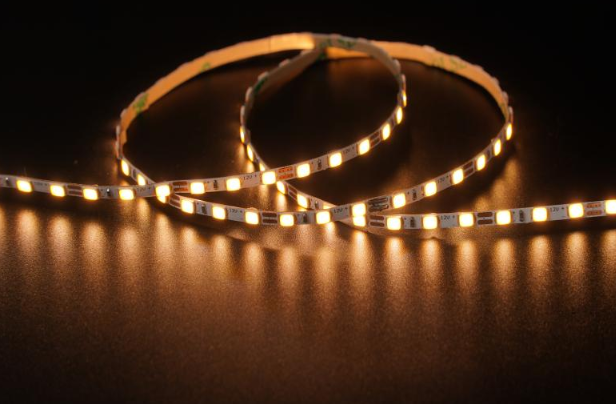
The durability argument between silicone and PVC LED strips starts at the molecular level. PVC, or polyvinyl chloride, is a thermoplastic. To make it flexible enough to wrap around a printed circuit board, manufacturers add plasticizers, small molecules that slide between the polymer chains and soften the material. Over time and under heat, those plasticizers migrate out. The PVC shrinks, becomes brittle, and can pull away from the LED board, creating air gaps that trap moisture. Silicone is a thermoset elastomer with a backbone of silicon oxygen bonds. It requires no plasticizers to remain flexible, and once cured, its molecular network is permanently set. This fundamental chemical difference means that a silicone strip stays dimensionally stable and elastic across its entire service life. When a lighting installation is expected to last ten or fifteen years, that stability is non negotiable.
One of the most visible failure modes of PVC LED strips is yellowing. The aromatic rings in many PVC formulations absorb ultraviolet radiation, initiating a degradation chain that shifts the material from crystal clear to amber to brown. When the encapsulation yellows, it acts as a filter that dulls the LED output and skews the color temperature, especially problematic for RGB and tunable white strips. Silicone, particularly the two part platinum cured variety, resists this degradation because its polymer backbone does not absorb in the UV spectrum the way carbon based chains do. Industry accelerated aging tests, such as those described in ASTM G154 for UV exposure, repeatedly show that silicone maintains optical transmission above ninety percent long after PVC samples have dropped below usable clarity. For retail displays, hospitality coves, and any application where the strip is exposed to daylight or strong artificial sources, silicone preserves the original light quality without the gradual color cast that PVC introduces over time.
Both silicone and PVC strips are sold with IP ratings, but the mechanism of waterproofing is completely different. PVC strips typically rely on a hollow sleeve with end caps and heat shrink tubing. Each end cap is a potential leak point, and any nick in the sleeve during installation creates an open path for water and dust. Silicone strips are solid extrusions where the encapsulation material bonds directly to the board with no internal cavities. There are no end caps to fail. The International Electrotechnical Commission standard IEC 60529 defines IP67 and IP68 as protection against immersion, and a fully molded silicone strip achieves this rating intrinsically, not through assembly. In outdoor architectural projects, pool surrounds, and sauna lighting, this distinction determines whether the strip survives its first year or fails from internal corrosion that no one can see until the LEDs start flickering.
Durability is not just about resisting the environment. It is also about surviving installation and thermal cycling without cracking. PVC strips that have lost plasticizers become stiff and prone to cracking at bends, especially in cold weather. Silicone remains elastic at temperatures far below freezing and tolerates tight bending radii without stress whitening or tearing. This elasticity also helps absorb vibration and physical impact, which matters in commercial kitchens, entertainment venues, and transportation lighting. The fatigue resistance of silicone allows it to be flexed repeatedly without the micro cracks that develop in rigidized PVC. Installers who have worked with both materials consistently observe that silicone strips forgive the handling that happens on a busy job site, while PVC strips demand extreme care to avoid invisible damage that shows up months later.
LEDs generate heat, and the encapsulation must handle that heat without degrading. PVC softens at relatively low temperatures, and in hot climates or inside enclosed fixtures, the material can deform, sag, or even release corrosive hydrochloric acid traces if it thermally breaks down. Silicone comfortably handles continuous operating temperatures from negative forty degrees Celsius to over one hundred fifty degrees Celsius. This wide thermal window makes silicone strips suitable for applications that PVC simply cannot handle: freezer case lighting, outdoor installations in desert climates, and high density strips where the LEDs run at elevated currents. The Illuminating Engineering Society technical memorandum TM 21 projects lumen maintenance based on operating temperature, and the lower thermal resistance of silicone encapsulation helps keep LED junction temperatures down, directly extending the rated life of the diodes themselves.
Comparing purchase price without factoring in replacement cost is a trap. A PVC strip might cost less per meter upfront, but if it requires two or three replacements over the life of a building, the labor, access equipment, and disposal costs erase any initial savings. Property managers and facility engineers increasingly calculate total cost of ownership on a ten year timeline, and silicone LED strips consistently come out ahead because they rarely need unscheduled maintenance. The reliability also protects the reputation of the contractor and the lighting designer. Callbacks for failed lighting are expensive and damage client relationships. Specifying silicone from the start is a professional decision that reduces risk for everyone on the project.
The difference between a silicone strip that lasts and one that disappoints often comes from the manufacturing process. Lightwolf operates a dedicated silicone LED production facility where every strip is tested for lumen output, color consistency, and IP rating compliance before shipment. The company sources high purity silicone compounds and flexible PCB substrates from qualified material partners, and its engineering team works directly with lighting designers to configure custom profiles, lengths, and connector solutions for projects ranging from hotel atrium coves to marine deck lighting. Because Lightwolf controls the entire manufacturing sequence from extrusion to final assembly, lead times stay predictable and batch quality remains stable. For contractors and distributors, partnering with Lightwolf means securing a dependable source of durable, waterproof silicone LED strips that carry international certifications and arrive on site ready to install, project after project.
 EN
EN