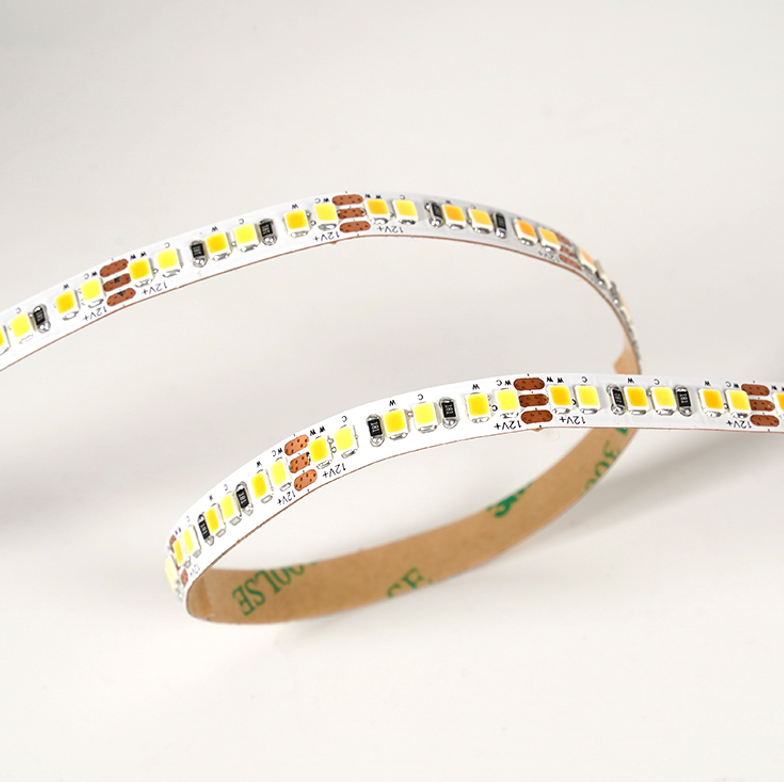
The real difference between an LED strip that lasts for years outdoors and one that yellows and cracks after a short period almost always comes down to the encapsulation material. Standard LED strips often rely on a thin epoxy coating or a hollow plastic sleeve for protection. Silicone LED strips are fundamentally different because the entire strip, including the circuit board and LEDs, is encased in a solid, seamless body of silicone rubber. Installers who work in humid or coastal environments frequently observe that sleeved strips can trap moisture inside the plastic jacket through microscopic gaps at the end caps, leading to corrosion that eventually darkens sections of the strip. A fully molded silicone strip, by contrast, has no air cavity and no entry path for water or salt spray. The material science behind this is clear: silicone is a thermoset elastomer with a naturally hydrophobic molecular structure. Once cured, it remains UV stable and flexible across a wide temperature range. Unlike PVC or epoxy that can degrade under continuous sunlight, a properly cured silicone extrusion bonds directly to the LED board, achieving a true ingress protection level. The International Electrotechnical Commission standard IEC 60529 defines the IP rating system, and a solid silicone strip can genuinely reach IP67 or IP68 because there is simply no internal cavity for water to penetrate.
Waterproof ratings on a specification sheet only tell part of the story. In applications like outdoor architectural lighting, pool surrounds, or food display refrigeration where moisture and condensation are constant, the long term failure mode of many LED strips is moisture ingress at the connection points or through the polymer material itself. Silicone encapsulation addresses both paths by eliminating the mechanical joints and using a material with extremely low water vapor permeability. Test data from reputable LED component manufacturers indicates that fully encapsulated silicone strips consistently retain a higher percentage of their initial lumen output after prolonged damp heat testing, as defined by industry environmental test standards. This is because the silicone prevents moisture from reaching the phosphor layer on the LED chips, which is one of the main causes of color shift and lumen depreciation in humid environments. Quality focused manufacturers often design their silicone strips to meet the requirements of standards like UL 8750 for LED lighting equipment, passing thermal cycling and humidity conditioning tests that simulate years of real world exposure. When a project calls for continuous duty in a challenging environment, engineers increasingly treat silicone encapsulation as a baseline requirement rather than an optional upgrade.
Flexibility in an LED strip means more than just being able to bend it once. It means surviving repeated handling during installation without the encapsulation material cracking, delaminating, or separating from the copper traces. Epoxy coated strips often fail at tight bends because the rigid coating snaps, creating an open circuit or a dark spot. Silicone extrusion remains elastic, allowing tight radius bends without damage. This characteristic has made silicone strips the preferred choice for channel letter lighting and complex signage where the strip must follow sharp curves. The thermal performance of silicone is equally important. The material remains flexible in sub zero temperatures, making it suitable for freezer case lighting, and it stays stable at elevated temperatures found in high power applications or hot climates. Silicone also acts as a thermal conductor relative to air, helping to wick heat away from the LED dice. Lower junction temperatures directly correlate with longer LED life. The Illuminating Engineering Society publishes TM 21, a technical memorandum for projecting lumen maintenance based on temperature data, and the cooler operating environment created by silicone encapsulation contributes to a measurably longer L70 rated life for the diodes.
The way a product installs often determines its true cost more than the purchase price. Silicone LED strips simplify field installation in several practical ways. Because the strip is already fully sealed, there is no need to assemble separate aluminum channels with diffuser covers simply to achieve weather resistance. The strip can often be mounted directly onto a clean surface using the integrated mounting clips or a neutral cure silicone adhesive that bonds well to the silicone body. The elimination of end cap sealing and heat shrink tube application at field cut points removes steps that are both time consuming and prone to inconsistent workmanship. Maintenance planners note that a strip which avoids premature failure also avoids the cost of access equipment and skilled labor for replacements over the building's life. When facility managers run total cost of ownership calculations over a ten year service life, the initial price difference between a fully molded silicone strip and a sleeved alternative is frequently recovered through a single avoided repair callout. This reliability transforms linear lighting from a consumable item that requires periodic budget attention into a fixed asset that simply works.
Lighting designers, electrical consultants, and procurement professionals evaluate products on more than just lumens per watt. They examine safety certifications, field reliability records, and the consistency of the supply chain. Silicone LED strips that carry international certifications such as CE, RoHS, and UL or equivalent marks provide instant credibility during the specification review process. Retail chains and hospitality brands often specify silicone encapsulated linear lighting for front of house applications because the brand experience cannot tolerate visible lighting failures. Batch to batch color consistency also factors heavily into the decision. Silicone strips manufactured under strict process control deliver minimal color temperature and tint variation between production runs, which is critical when a retailer updates one section of a store and expects it to match existing installations. The design flexibility of silicone, including the ability to produce tunable white variants, side emitting profiles, and custom lengths, allows lighting designers to use these strips as integrated design elements rather than off the shelf commodities. Specifiers who trust a product's certification trail and supply consistency write it into project documents with confidence.
The consistent quality of a silicone LED strip depends on the manufacturer's investment in precision extrusion equipment, in process inspection, and a managed supply chain. Lightwolf operates a dedicated silicone LED production facility where every strip is tested for lumen output, color temperature accuracy, and IP rating compliance before shipment. The company sources high purity silicone compounds and flexible PCB substrates from established material suppliers, and its engineering group collaborates directly with lighting designers to develop custom profiles, lengths, and connector solutions for projects ranging from hotel atrium coves to marine deck lighting. Because Lightwolf controls the entire manufacturing sequence from extrusion to final assembly, lead times stay predictable and batch quality remains stable. Standard product lines cover the most commonly requested specifications, and customized configurations can be delivered within short lead times. For contractors and distributors, working with a manufacturer like Lightwolf means securing a dependable source of waterproof, flexible LED strips that carry the required international certifications and arrive on site ready to install, project after project.
 EN
EN