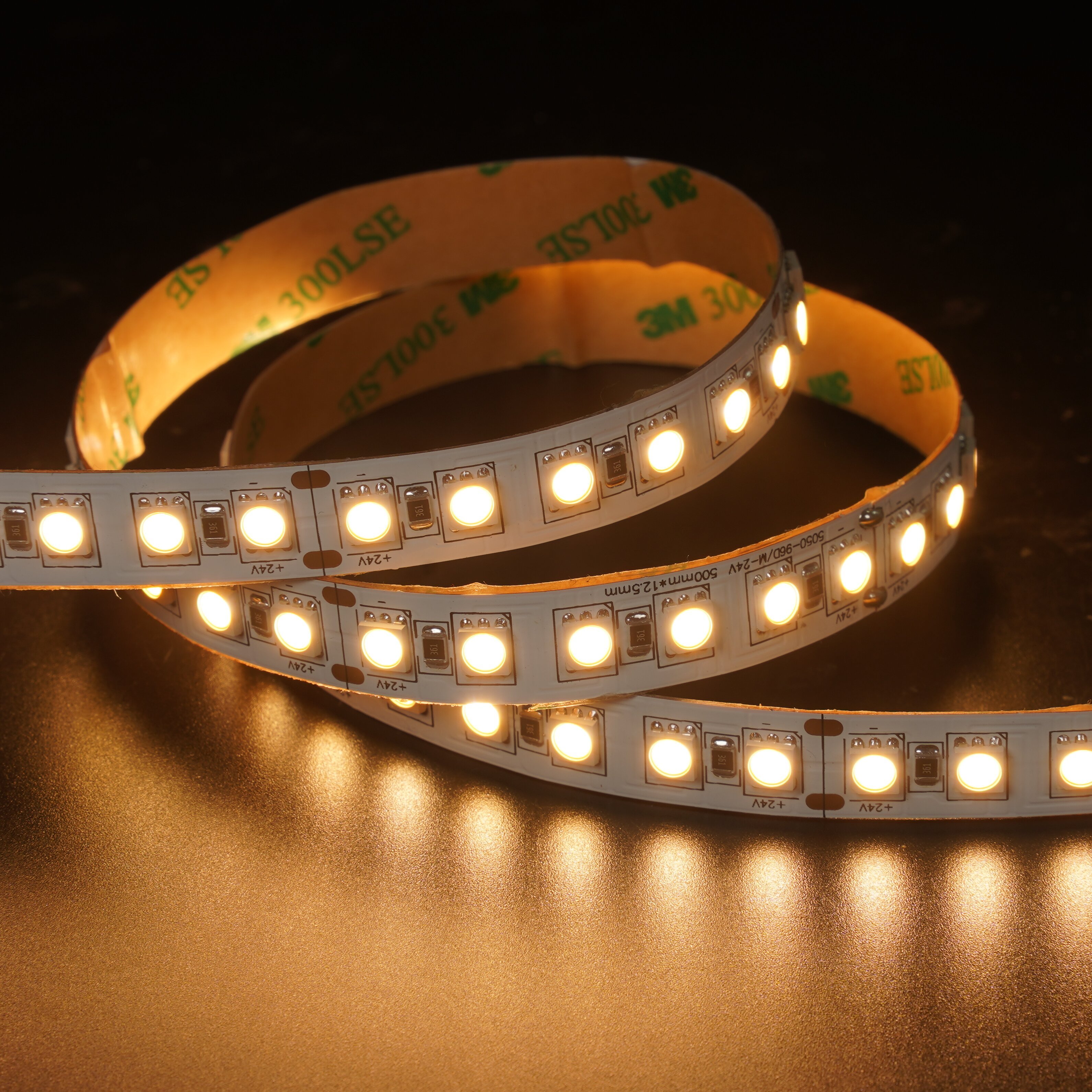
LED lights convert over 90% of electricity into visible light—unlike incandescent bulbs, which waste 90% as heat. This fundamental efficiency drives 30–90% energy savings across applications. Their directional output minimizes reflector losses, and their 50,000-hour lifespan drastically cuts replacement labor and material costs. For homeowners, swapping a single 60W incandescent for a 10W LED saves approximately $100 in energy costs over the bulb’s lifetime (based on $0.12/kWh and typical usage). When paired with smart controls like motion sensors or timers, total energy reductions can exceed 90% in optimized residential and commercial setups.
The efficiency gap becomes unmistakable when comparing lighting options delivering equivalent brightness—800 lumens:
| Lighting Type | Wattage | Lifespan (hours) | 50k-hour Energy Cost* | Total Ownership Cost |
|---|---|---|---|---|
| Incandescent | 60W | 1,200 | $360 | $402 |
| Fluorescent | 15W | 8,000 | $90 | $125 |
| LED | 10W | 50,000 | $60 | $70 |
*Based on $0.12/kWh electricity rate
LEDs use just one-sixth the wattage of incandescents and half that of fluorescents for the same light output—and last 42× longer than incandescents and over 6× longer than fluorescents. Though upfront LED costs are higher ($10 vs. $1 for incandescent), their total ownership cost over 50,000 hours is 83% lower than incandescent and 44% lower than fluorescent—saving $332 and $55 respectively. In high-usage commercial environments, these advantages compound rapidly, with some facilities reporting annual energy savings exceeding $740,000.
Understanding the diverse range of LED lighting options empowers consumers and businesses to select the right solution for each application—balancing performance, aesthetics, durability, and control.
Standard LED bulbs serve as direct, plug-and-play replacements for incandescent or CFL fixtures in table lamps, ceiling mounts, and recessed downlights. Dimmable LEDs offer smooth, flicker-free brightness control—ideal for living rooms, dining areas, and hospitality spaces where ambiance matters. Smart LEDs integrate natively with platforms like Apple HomeKit, Google Home, and Amazon Alexa, enabling voice control, automated scheduling, and dynamic color tuning. Outdoor LED fixtures are engineered for resilience, featuring weather-resistant housings and high IP ratings for reliable performance in rain, dust, and temperature extremes. Specialty LEDs include flexible strip lights for under-cabinet or cove lighting, ultra-thin panel lights for office ceilings, and high-output floodlights for stadiums or industrial yards—each purpose-built for functional or aesthetic intent.
Selecting the right LED requires evaluating four core technical attributes. Color Temperature (measured in Kelvin) defines light warmth or coolness: warm white (2700K–3000K) suits residential relaxation spaces; neutral white (3500K–4000K) balances comfort and clarity in kitchens and classrooms; cool white (4000K–5000K) and daylight (5000K–6500K) support visual acuity in offices, retail, and task-oriented environments. Color Rendering Index (CRI) measures how faithfully a light source reveals object colors—scores above 80 are recommended for general use; 90+ is ideal for art galleries, healthcare, and retail where accurate color discrimination is critical. Beam Angle determines light distribution: narrow beams (≤30°) spotlight artwork or signage; medium beams (40°–60°) suit track lighting; wide beams (≥100°) provide uniform ambient coverage in hallways or open-plan offices. For outdoor or wet-location use, IP (Ingress Protection) ratings indicate environmental resistance—IP65 offers full dust protection and resistance to low-pressure water jets, making it suitable for covered porches or parking lot fixtures; IP67 adds temporary submersion resistance for ground-level landscape lighting.
LED lighting delivers measurable value across all built environments—not just through energy savings, but via enhanced safety, controllability, and longevity.
In residential settings, LEDs enable layered lighting strategies: warm-dimmable bulbs create inviting atmospheres in living rooms and bedrooms, while high-CRI, cool-white task lighting improves visibility in kitchens, home offices, and bathrooms. Adjustable color temperature options let users shift from relaxing amber tones at night to alerting daylight hues in the morning—supporting circadian health.
Commercial applications prioritize operational performance and brand experience. Retailers deploy high-CRI LED spotlights and linear pendants to highlight merchandise and reinforce visual merchandising strategies. Offices achieve up to 70% energy reduction versus legacy fluorescent systems using integrated LED panels with occupancy sensing and daylight harvesting. Hospitality venues leverage tunable-white LEDs to dynamically match interior design themes or time-of-day programming—enhancing guest perception without increasing utility spend.
In industrial facilities, ruggedized LEDs meet demanding physical and regulatory requirements. IP65- and IP67-rated high-bay fixtures withstand warehouse dust, moisture, and vibration—reducing maintenance frequency by up to 80% compared to metal halide alternatives. Explosion-proof LED luminaires comply with UL 844 and ATEX standards for safe operation in hazardous locations like chemical processing plants or grain silos. Their instant-on capability and cold-weather reliability further improve uptime and worker safety.
Across all sectors, the 50,000+ hour rated lifespan—coupled with minimal lumen depreciation—translates to fewer service calls, lower labor costs, and predictable long-term budgeting.
Modern outdoor LED lighting combines sustainability with intelligent automation. Solar-powered LED fixtures eliminate grid dependency and reduce carbon emissions—especially effective in remote or off-grid locations like rural pathways or park perimeters. Integrated passive infrared (PIR) motion sensors activate illumination only upon detecting movement, extending battery life and enhancing security at driveways, entryways, and perimeter zones. Photocells ensure automatic dusk-to-dawn operation, adjusting output based on ambient light—preventing unnecessary daytime use while maintaining consistent nighttime visibility.
For larger-scale deployments—such as municipal street lighting, university campuses, or logistics parks—IoT-enabled LED systems provide centralized monitoring and adaptive control. These networks support remote dimming schedules, real-time fault detection, predictive maintenance alerts, and energy consumption analytics via cloud-based dashboards. The result is not only reduced energy use and maintenance overhead but also improved public safety, extended system longevity, and actionable insights for future infrastructure planning.
LED lights convert over 90% of electricity into visible light, whereas incandescent bulbs waste 90% of electricity as heat, resulting in significant energy efficiency savings.
LED lights last up to 50,000 hours, significantly outlasting incandescent (1,200 hours) and fluorescent (8,000 hours) bulbs.
Swapping a single incandescent bulb for an LED can save approximately $100 in energy costs over the bulb’s lifespan. In larger facilities, annual savings can exceed $740,000.
Consider color temperature, CRI (Color Rendering Index), beam angle, and IP (Ingress Protection) ratings to ensure the LED light meets your functional and aesthetic needs.
Yes, smart LEDs connect to platforms like Apple HomeKit, Google Home, and Amazon Alexa, enabling voice control, automated scheduling, and dynamic color adjustments.
 EN
EN