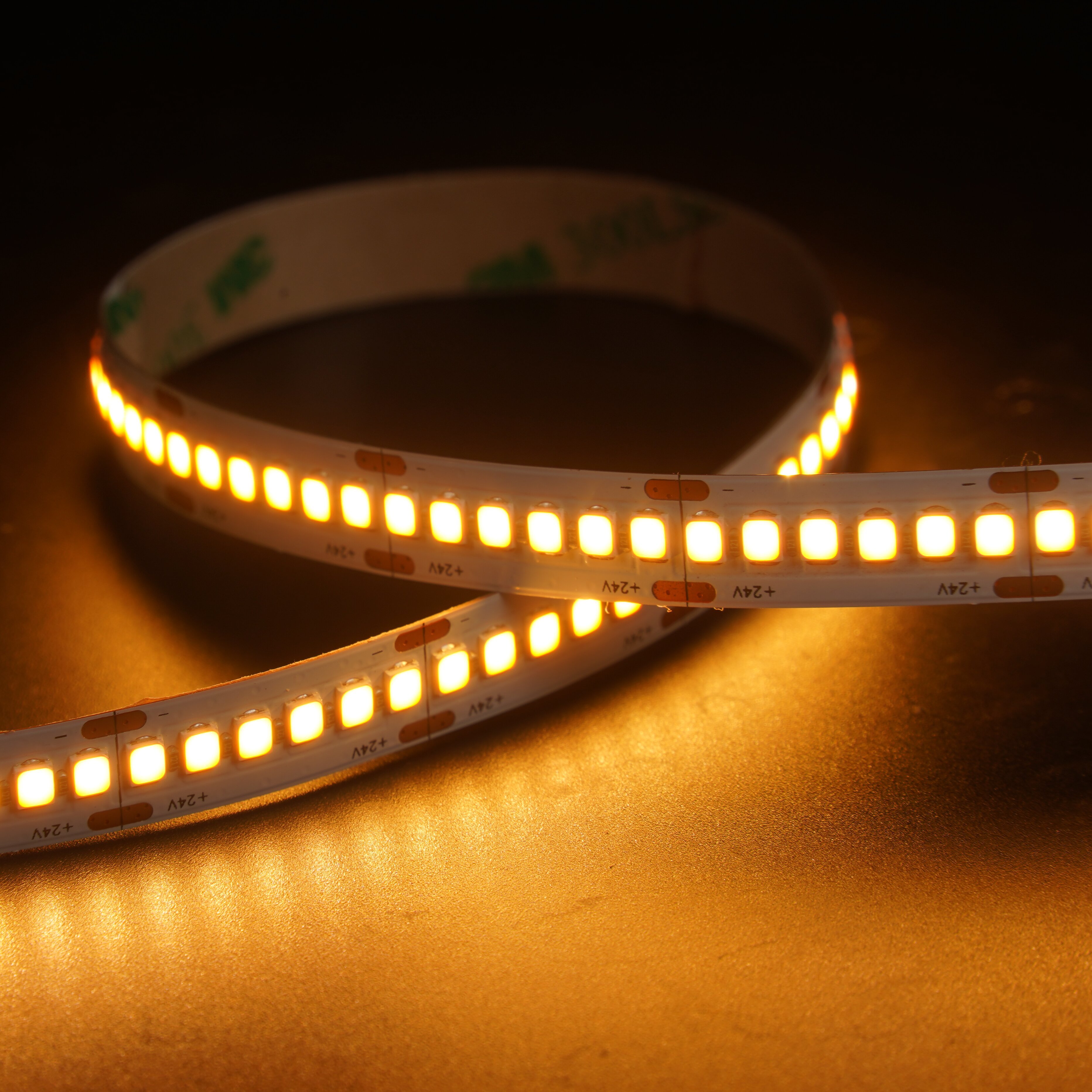
LED strip lights have evolved from niche accent pieces into a cornerstone of contemporary interior design. By 2026, their blend of versatility and efficiency makes them indispensable for achieving personalized ambiance. Unlike bulky fixtures, flexible LED strips tuck seamlessly into coves, under cabinets, or behind furniture—casting soft, even light that transforms a room’s mood. They consume up to 80% less energy than traditional bulbs and last over 50,000 hours, significantly reducing both waste and long-term replacement costs. Installation is remarkably simple: many strips feature peel-and-stick backing, require no wiring, and can be cut to custom lengths at marked intervals. Advanced models now support tunable white (2700K–6500K), full RGB color control, voice integration, and dynamic scenes that adapt to time of day or activity. Whether highlighting artwork, outlining shelves, or defining a cozy reading nook, LED strips deliver precise, adjustable illumination that static lighting simply cannot match. Their slim profile and low heat emission also unlock creative applications in tight spaces—from stair risers to mirror frames. For anyone crafting a modern, sustainable home in 2026, integrating LED strip lighting isn’t just a trend—it’s a practical upgrade that marries aesthetic intention with measurable performance.
High-end smart LED strips bring adaptive, whole-home lighting within reach. They integrate natively with Alexa, Google Home, and Apple HomeKit—enabling intuitive voice or app-based control over brightness, color, scheduling, and scene transitions. Top-tier models pack over 100 LEDs per meter and deliver more than 1,000 lumens per meter: bright enough for task lighting yet fully dimmable for ambient warmth. Tunable white ranges (2700K–6500K) and rich RGB capabilities support presets like sunrise simulation, movie mode, or focused reading light—all while retaining the last-used settings. With Color Rendering Index (CRI) above 90, they render skin tones, textiles, and finishes with exceptional fidelity, making them ideal for living rooms, home offices, and entertainment zones. Most include industrial-grade adhesive backing and precise cut points every 3–5 cm for clean, custom installations.
Budget-conscious options prove high performance doesn’t require premium pricing. Value-focused LED strips often use COB (chip-on-board) technology—eliminating visible pixelation by embedding LEDs in a continuous line. This delivers uniform, flicker-free illumination exceeding 1,000 lumens per meter, thanks to efficient thermal management and wide beam angles. While they may lack native smart-home protocols, most include an intuitive remote or streamlined app for adjusting color, brightness, and basic effects. Strong adhesive backing holds reliably on smooth surfaces, and clearly marked cut points every 1–2 meters simplify trimming for kitchens, bookshelves, or accent walls. Rated IP20 for indoor use and engineered for 30,000+ hours of operation, these strips offer robust reliability across RGB, RGBW, and tunable white configurations—making them a go-to choice for confident DIYers.
Architectural-grade LED strips are designed for designers and discerning homeowners who prioritize seamless integration and refined light quality. These strips use high-density, high-CRI (>90) chips with beam angles spanning 120°–180° to produce shadow-free, even washes of light—ideal for coves, archways, and cabinetry. Many adopt COB construction to eliminate hotspots and ensure visual continuity. Available in tunable white (2700K–6500K) and with waterproof ratings up to IP67, they’re suitable for bathrooms, outdoor patios, or moisture-prone zones. Mounting integrity is critical: leading models feature reinforced 3M VHB tape or are optimized for aluminum channels that provide thermal dissipation and flush, professional-grade installation. Flicker-free drivers and precise cut points (often every 2–5 cm) support demanding applications—from gallery lighting and photography studios to textured wall features. In luxury residential interiors, they embody the quiet sophistication of modern minimalism while supporting DMX or smart controller integration for synchronized scene programming.
Choosing the right LED strip goes beyond aesthetics—it hinges on three interdependent technical factors that shape how light feels and functions in your space. Getting them right ensures your lighting supports both comfort and utility, avoiding flat, harsh, or inconsistent results.
Brightness is measured in lumens per meter (lm/m): 300–500 lm/m suits subtle accent lighting; 700+ lm/m is recommended for functional task zones like kitchen counters or desks. Color Rendering Index (CRI) measures fidelity—aim for ≥90 in living areas where accurate color perception matters (e.g., for art, décor, or skin tones). Color temperature (measured in Kelvin) sets emotional tone: warm white (2700K–3000K) fosters relaxation; neutral white (3500K–4000K) balances clarity and comfort; cool white (4500K–5000K) supports focus and mimics daylight. Prioritizing all three—not just brightness or color alone—ensures light enhances, rather than undermines, your interior’s intended atmosphere.
Practical installation considerations often determine long-term success. IP rating indicates environmental protection: IP20 is standard for dry indoor spaces (bedrooms, living rooms); IP65 adds splash resistance for kitchens or bathrooms; IP67 enables temporary submersion, suitable for covered outdoor use. Adhesive strength is equally vital—low-quality backing can fail over time, especially on textured, cold, or dusty surfaces. For lasting security, supplement with mounting clips or aluminum channels, particularly in high-traffic or heat-prone areas. Finally, verify cut point spacing: most strips allow safe trimming every 3–6 LEDs (typically 3–10 cm apart). Matching cut intervals to your layout prevents wasted material, circuit damage, or uneven light distribution—and ensures clean, professional results without specialized tools.
LED strip lights are energy-efficient, versatile, and durable. They offer personalized ambiance, tunable color and brightness, and seamless integration into spaces. They also reduce long-term costs with a lifespan of over 50,000 hours.
For task lighting, choose strips with high brightness (700+ lumens/m) and a high CRI (>90). For ambient light, focus on tunable color temperatures (2700K–6500K). Architectural strips are ideal for precision design details and high-end installations.
Installation is usually simple with peel-and-stick backing, though mounting clips or aluminum channels provide extra stability. Always check cut points and ensure adhesive works on the intended surface.
Many premium LED strip lights integrate with Alexa, Google Home, and Apple HomeKit, offering voice-controlled operation and custom scene setting.
IP ratings indicate environmental resistance. IP20 suits dry indoor spaces, IP65 adds splash resistance for kitchens or bathrooms, and IP67 is suitable for temporary submersion or outdoor use under protection.

 EN
EN