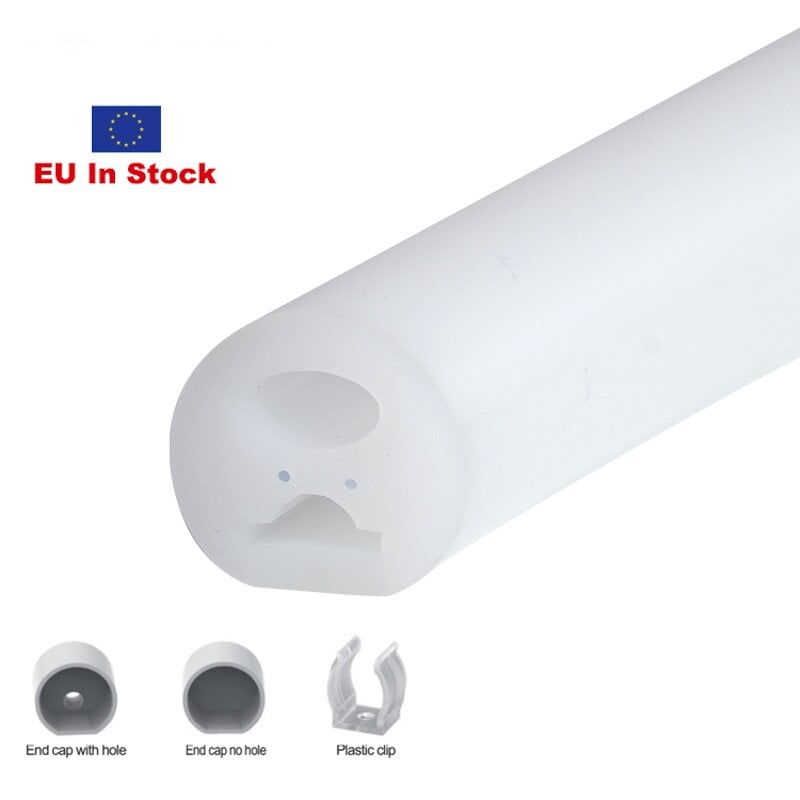
Rising electricity costs and sustainability goals are driving commercial adoption of LED neon light. Businesses now prioritize lighting systems that reduce operational expenses while meeting environmental standards. A 2023 industry survey found 68% of retailers cited "lower energy bills" as their primary reason for upgrading to modern alternatives.
LED neon operates at 6–10 watts per foot, versus 60–100 watts for traditional neon tubes (Lighting Efficiency Report 2023). This efficiency stems from solid-state technology, which converts over 90% of electricity into light—unlike gas-filled glass tubes that waste 80% of energy as heat.
| Parameter | LED Neon Light | Traditional Neon |
|---|---|---|
| Power Usage per Hour | 0.15 kWh | 0.5 kWh |
| Annual Energy Cost* | $54 | $180 |
| Lifespan | 50,000–90,000h | 15,000–30,000h |
| *Based on 10 hours daily use @ $0.12/kWh |
A national retail chain reduced its outdoor signage energy use by 78% after switching 350 locations to LED neon. Each store saved 1,450 kWh annually—equivalent to powering 12 refrigerators yearly (Commercial Energy Audit 2023).
For a 30-foot storefront sign running 14 hours daily:
The three-year ROI averages 145%, factoring in reduced maintenance and rebates.
Cities like Oslo and San Francisco now require LED-based lighting for public installations to meet carbon-neutral targets. LED neon’s blend of design versatility and 6x lower CO₂ emissions per lumen (vs. traditional neon) makes it integral to modern smart-city initiatives.
Old school neon signs run on some seriously high voltage, sometimes as much as 15,000 volts. They need those big transformers and glass tubes packed with dangerous stuff like mercury or argon gas inside. What people don't always realize is how hot these things get when they're running. The surfaces can actually reach over 150 degrees Fahrenheit, which is pretty dangerous stuff (National Fire Protection Association found this in their 2023 report). This kind of heat poses real fire hazards especially in tight spaces where airflow is limited. And let's not forget about all those delicate glass parts mixed with such powerful electricity. Fires aren't uncommon either. Fire inspectors have noted that around one out of every seven commercial fire code violations actually involves old fashioned neon signs still hanging around in businesses today.
LED neon lights work with solid state tech that runs on just 12 to 24 volts DC power, so there's no need for those dangerous old transformers anymore. The silicone covering stays pretty much room temperature even if left on all day long. Heat production drops around 92 percent when compared to regular neon tubes according to what the safety folks say. Because they run on such low voltage, these lights can be installed safely in places where moisture is a problem, think restaurants kitchens or outside patios, without needing all sorts of permits from building inspectors.
A 2022 retrofit of 47 retail stores replacing traditional neon with LED alternatives resulted in:
This landmark safety study demonstrated LED neon’s effectiveness in high-traffic environments like shopping malls and transit hubs.
Modern building codes increasingly restrict traditional neon in three key scenarios:
LED alternatives now dominate 89% of new commercial installations according to 2023 UL certification data, reflecting updated safety priorities.
These protocols reduce installation risks while maintaining compliance with evolving OSHA and NFPA electrical safety standards.
Traditional neon signs require 3-4 annual maintenance interventions on average, with fragile glass tubes prone to cracking in temperature swings or high-traffic environments. A 2023 analysis of commercial signage systems revealed that gas refills and electrode replacements account for 60% of ongoing costs in traditional neon upkeep.
LED neon light maintains 90% brightness after 50,000 hours—seven times longer than traditional neon’s 8,000-hour lifespan. Its flexible polycarbonate housing withstands UV exposure, moisture, and temperature extremes (-40°F to 140°F), eliminating glass breakage risks. Durability testing shows zero lumen depreciation after 18 months in coastal environments.
A 24-month study of Times Square billboards found LED neon installations had 92% operational uptime versus 67% for traditional neon. Vibrant color consistency remained stable despite snow, rain, and direct sunlight exposure.
Casinos using LED neon lighting report 80% fewer service calls compared to neon-fed properties. The technology’s instant startup prevents flickering issues common in cold-started traditional tubes.
Switching to LED neon slashes annual signage upkeep costs by $18/ft² for businesses with 24/7 illuminated storefronts. Maintenance teams redeploy 14 hours monthly previously spent on tube replacements.
Most business owners don't realize all the money they're losing on old school neon signs. The glass tubes break down pretty often, and those mercury gas refills run anywhere from around $200 to sometimes over $500 each year just for one sign. Plus getting someone qualified to fix them adds even more to the bottom line. Over time these expenses can actually end up being 40 to 60 percent higher than what LEDs would cost instead. According to some recent industry data from last year, those big transformers in traditional neon setups need regular checkups roughly once every year and a half. When something goes wrong with them, stores typically shell out between $1,200 and $2,500 to get things fixed up again.
LED neon lights do come with about 20 to 30 percent more upfront expense compared to regular ones, but they make up for this through their efficient power usage and almost no need for maintenance. The return on investment typically happens somewhere between 12 and 24 months after installation. Take a look at a standard 10 foot LED sign, it only uses around 80 watts per hour while traditional neon signs eat up about 400 watts during the same time frame. That translates to roughly $320 saved every year when electricity costs are at $0.12 per kilowatt hour. And let's not forget about longevity either. These LED signs last about 50,000 hours, which is actually 5 to 7 times longer than what we see with glass neon alternatives. When all these factors are considered together, businesses can expect to save well over $4,800 across ten years from each installation they make.
A national restaurant chain replaced 120 traditional neon signs with LED equivalents, cutting annual energy bills by $58,000 (72% reduction). Maintenance costs dropped from $28,000/year to $3,500 due to fewer failures and no gas refills. Over three years, the switch saved $218,000—enough to fund a new location’s marketing budget.
LED neon’s flexible, lightweight design enables installation in 2–4 hours versus 8+ hours for fragile glass tubes. This cuts labor expenses by 60% and minimizes disruptions to customer-facing operations. A 2024 facility management report notes hotels reduced lobby sign installation downtime from 2 days to 5 hours using LED systems.
LED neon light reduces environmental impact through 70-75% lower energy consumption compared to traditional neon, as highlighted in the 2024 Urban Lighting Report. This efficiency, combined with recyclable silicone materials and mercury-free production, lowers manufacturing emissions by up to 40% (Ponemon 2023).
Major cities like Amsterdam and Singapore now prioritize LED neon for public art and architectural lighting. Its low-voltage operation aligns with LEED certification standards, contributing to an 18% annual rise in municipal adoption rates since 2022.
Silicone-encased LED strips bend to 180° without damage, enabling curved signage and 3D installations. Businesses use RGBW tuning to match brand colors precisely, while IP67-rated variants withstand extreme weather for outdoor use.
From interactive storefronts to seasonal pop-up displays, LED neon’s modular design supports rapid reconfiguration. A 2023 retail study showed customizable layouts improved customer engagement by 34% in flagship stores.

 EN
EN