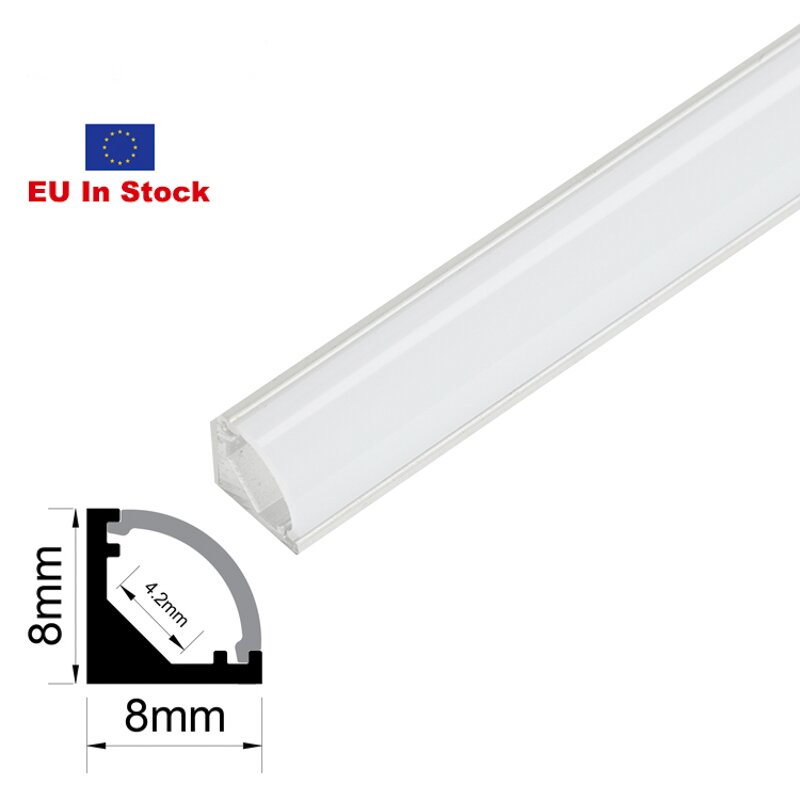
When aluminum profiles don't match properly with LED strips, we often see installation problems along with issues related to thermal management. The internal space needs to fit three main features of the LED strips correctly: their width which is usually around 8 to 12 mm, the overall thickness including any adhesive backing material, and the height of components on the PCB like resistors or integrated circuits that stick out from the base layer. Leaving about half a millimeter of space between the strip and sides of the channel helps maintain good thermal contact while still giving room for expansion when things get warm. If the profile is wider than the strip by more than 1 mm, air gaps form inside that can cut down on heat dissipation by as much as 30 percent, which means the light output will degrade faster over time. With higher density LED strips where there are lots of tiny lights packed together, going for deeper channels makes sense because it spreads out those hot spots better. Just take a look at how densely packed the diodes are to figure out what minimum depth works best for the application.
The thermal conductivity of aluminum at around 201 W/m·K means it works pretty well as a heat sink, helping to slow down those sudden temperature jumps at the junction. But here's the catch: the actual wall thickness determines just how good this heat management really is. When walls drop below 1.5 mm, we start seeing hotspots that can push past 85°C. And anyone who knows LEDs understands what happens then—their lifespan gets cut in half with every 10°C increase. On the flip side, profiles with walls measuring 2 mm or thicker keep those chips cool enough, staying under 65°C throughout their 12 hour workday. This kind of temperature control matters because it keeps the light output strong (over 90% after 50k hours), maintains color quality within acceptable ranges (SDCM no worse than 3), and most importantly protects the driver components, especially those capacitors that tend to fail first. From what we've seen in practice, bumping up wall thickness by just half a millimeter adds about 23% to the useful life of LEDs, mainly because it slows down the breakdown of those phosphor materials inside.
When installing surface mounted profiles, they typically get fixed right onto whatever surface using screws or glue. The important thing is doing proper load calculations based on how long the span is and what the strip actually weighs. For recessed installations, there needs to be really tight cavity tolerances below 1.5 mm so no gaps show through and the light lines stay even across the whole area. Suspended systems need to handle at least 1.5 times the weight of the entire fixture according to standard IEC 60598 requirements. Retrofitting old buildings brings some special problems with heat management. Most existing structures limit air movement around fixtures which makes it harder for heat to escape properly. This can shorten LED life expectancy by about 30% in tight spaces, according to research from Illuminating Engineering Society back in 2023. Before making any final decisions, check if there's enough space to reach junction boxes, whether components will fit together correctly, and make sure there's room to maintain everything later on.
The corner profiles rely on triangular shaped extrusions that spread out mechanical stress at those 90 degree corners. This is really important when integrating coves into buildings and maintaining structural strength in architectural features. Skirting profiles do double duty by hiding wires and standing up to impacts in areas where people walk a lot. The commercial quality ones have wall reinforcement that's at least 2mm thick, which makes them much tougher. Three sided U channel systems create that nice 270 degree light spread that works great for shelves and displays in stores. Retailers usually pair these with IP54 rated silicone gaskets to keep dust out of sensitive equipment. When dealing with curved installations, it pays to go with flexible aluminum alloys that can stretch between 8 and 12 percent. These materials maintain consistent optical properties even when bent, avoiding problems like kinks or layers peeling apart over time.
The type of diffuser used has a major impact on how light behaves in a space. Frosted diffusers create that nice wide spread of light around 120 degrees, which cuts down on those annoying glares and sharp shadows. They work really well in places like cove lighting installations or standard residential ceilings where we want something softer overall. Opal diffusers strike a good middle ground, letting through about 80 to 85 percent of the light while spreading it out evenly across surfaces. This helps eliminate those bright spots that can be distracting in retail settings or when working at a desk. Clear lenses are different though they maintain over 92 percent of the original brightness and produce very focused beams of approximately 30 degrees. These are great for situations where precise lighting is needed, like reading areas or detailed workspaces. When comparing these options, frosted diffusers typically cut down on light output by roughly 15 percent compared to clear ones. Opal falls somewhere in between, offering moderate levels of both light transmission and spread characteristics.
IP ratings indicate protection level—but real-world performance depends on how sealing components are applied. For example, an IP65-rated profile may suffice for kitchen under-cabinets but fail near pools without continuous rubber gaskets and compression-fit end caps. Critical pairings include:
| Environment | Minimum IP | Sealing Components Needed | Failure Risk If Mismatched |
|---|---|---|---|
| Bathroom zones | IP67 | Silicone-sealed end caps | 68% higher corrosion (2023 data) |
| Industrial dust | IP6X | Compression gaskets + thermal pads | Dust-induced driver failures |
| Outdoor overhangs | IP65 | Continuous rubber gaskets | Water ingress in 14 months |
| Food processing | IP69K | NSF-grade silicone joints | Sanitation violations |
Always validate sealing methods against actual exposure points—including cleaning protocols, splash angles, and frequency of thermal cycling—not just the rated IP digits.
Picking out the correct aluminum profile means finding that sweet spot between what the lights actually need to do and how tough they have to be against the elements. When we talk about task lighting, think places like store windows where products need to shine, operating rooms where doctors work, or even home kitchens where people cook. These situations call for really good diffusers, maybe something frosted or those fancy micro-prismatic ones, so there's no harsh glare and everything looks evenly lit. For accent lighting in places like art galleries or on stage, narrow beams are king. The light should hit exactly where it needs to go without spilling all over the place, which is why many folks opt for clear or directional diffusers instead. And let's not forget about the outside world either. Weather conditions, temperature changes, humidity levels all play their part in determining which profiles will last the longest without breaking down.
| Factor | Industrial Setting | Residential/Commercial | Solution |
|---|---|---|---|
| Moisture | High (food processing) | Moderate (bathrooms) | IP65+ with silicone seals |
| Corrosive Agents | Chemicals (labs) | Cleaning products | Powder-coated alloys |
| Thermal Stress | Machinery heat | Ambient fluctuations | Integrated heat sinks |
Marine grade anodized coatings really stand out when it comes to fighting corrosion in places like coastlines or areas with harsh chemicals. According to research published by the Lighting Research Center back in 2023, getting the environmental specs wrong can actually make LEDs fail much faster than expected, around 58% quicker in fact. When working with powerful LEDs in tight thermal conditions, focus on good heat transfer properties and adequate wall thickness. And don't forget to match the light output characteristics with what people actually need for their daily rhythms and overall comfort in space.
 EN
EN