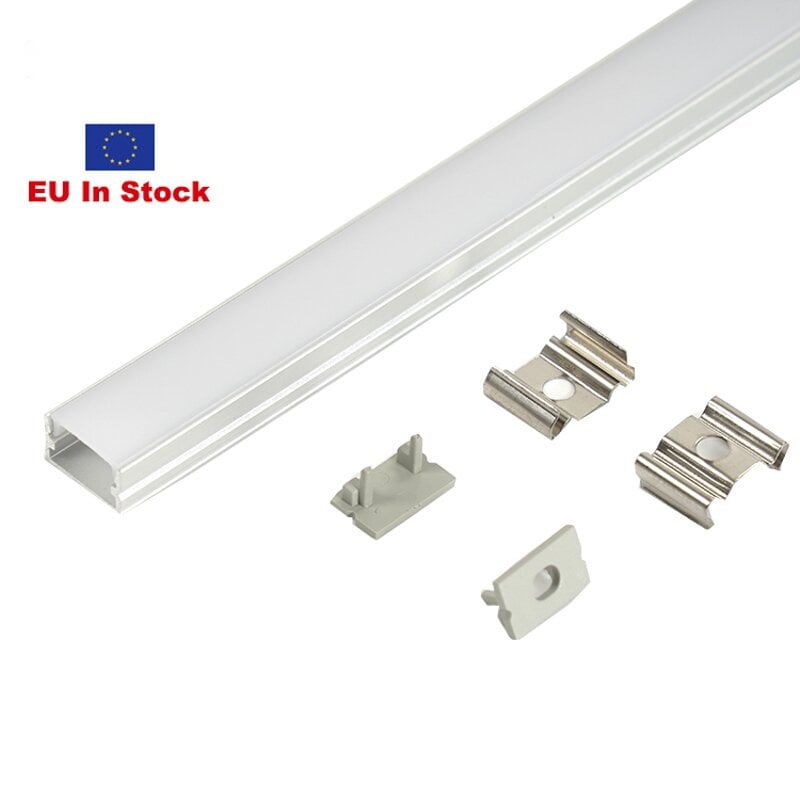
Flawless lighting integration begins with millimeter-perfect dimensions. Custom extrusion allows profiles to match exact architectural requirements—whether recessed into tight cabinet reveals or fitted within bespoke ceiling coves. Engineered channels ensure consistent LED alignment and eliminate light gaps, a critical factor in high-fidelity applications like museum displays, where even 0.5mm deviations can cause visible shadow artifacts. This precision also supports seamless mitred corners and curved transitions, preserving uninterrupted illumination across complex forms.
Finish selection directly influences visual cohesion between lighting hardware and interior design. Brushed nickel delivers subtle metallic warmth suited to industrial lofts; matte black recedes elegantly against dark ceilings in contemporary spaces; anodized aluminum provides corrosion resistance and refined texture ideal for coastal or minimalist environments. Importantly, these finishes impact optical performance—matte surfaces reduce glare by up to 40% compared to polished alternatives, as confirmed in peer-reviewed 2023 lighting studies published in LEUKOS.
For moisture-prone or outdoor installations, IP67-rated (or higher) profiles are essential. These systems combine dual-seal gaskets, marine-grade aluminum alloys, and UV-stabilized polycarbonate diffusers to resist humidity, salt exposure, poolside splashes, and temperature extremes from –20°C to 60°C. Unlike standard profiles, this integrated thermal and environmental management sustains lumen output and color consistency over time—critical for permanent exterior deployments where degradation often occurs within months.
Bendable aluminum profiles accommodate radii as tight as 6 inches while maintaining structural integrity and optical consistency. Their flexible yet rigid extrusion secures the LED strip without sagging or shifting, eliminating hotspots and dark gaps along curves. Integrated thermal pathways draw heat away from diodes, preventing localized dimming or color shift—even on spiral staircases or rounded soffits. The result is smooth, contour-following illumination that functions as both light source and architectural line.
Recessed profiles disappear into ceilings, walls, or cabinetry, transforming LED strips into invisible light sources. With flush-mount housings and precision-milled edges, they prevent light leakage while delivering pure ambient washes. Frosted polycarbonate diffusers soften output and suppress glare—key for minimalist interiors where clean sightlines define the aesthetic. When installed in coves or cornices, these systems generate the signature “floating” glow that anchors modern spatial composition.
LED strip profiles function as silent style coordinators—where finish and diffuser choices reinforce broader design narratives. In Japandi spaces, matte black or brushed nickel profiles paired with frosted diffusers echo natural textures and deliver soft, uniform light ideal for serene, uncluttered environments. These finishes also resist smudges in high-touch zones. Conversely, French classic interiors leverage anodized gold or polished brass profiles with clear diffusers to project crisp, directional light—accentuating ornate moldings, rich textiles, and gilded details. Crucially, durable metallic coatings withstand the humidity common in period-inspired kitchens and bathrooms, ensuring longevity without compromising elegance.
Optical control starts at the profile level. Channel depth governs glare and diffusion: profiles deeper than 15mm cut glare by ~40% through internal reflection while preserving lumen density. Reflector geometry determines directionality—45-degree angles optimize wall grazing; steeper angles focus output for task lighting. Lens selection fine-tunes spread and quality: clear lenses retain native beam angles (90–120°), supporting precise architectural highlighting; frosted lenses widen dispersion to 150° and eliminate hotspots via micro-diffusion. Together, these elements allow calibrated light delivery—from museum-grade accenting to immersive ambient washes—maximizing usable lumens per watt in real-world applications.
Precision sizing ensures perfect lighting integration by allowing profiles to match exact architectural requirements, preventing light gaps and shadow artifacts in high-fidelity applications.
Material finishes influence visual cohesion and optical performance by reducing glare and aligning with different decor styles. They can vary from brushed nickel to matte black and anodized aluminum.
Waterproofing is essential for moisture-prone or outdoor installations to resist humidity, salt exposure, and temperature extremes, ensuring sustained lumen output and color consistency.
Bendable profiles secure the LED strip without sagging or shifting, eliminating hotspots and dark gaps along curves, resulting in smooth and contour-following illumination.
Channel depth and lens type help shape the light spread and quality by cutting glare, optimizing directionality, and fine-tuning light dispersion for diverse applications.
 EN
EN