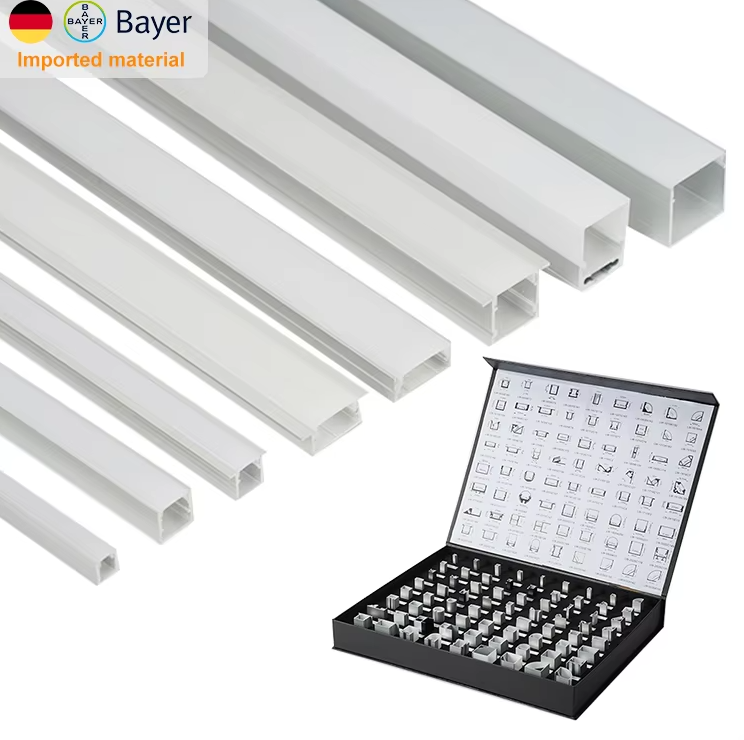
A frequent misstep in commercial lighting is choosing the LED strip first and treating the profile as a mere holder. In reality, the aluminum channel does several jobs. It pulls heat away from the diodes, shields the strip from dust and bumps, and gives the finished line its straight, clean appearance. A flimsy channel will bend during handling, and that bend becomes a visible wave once the lights are on.
For offices, retail stores, and hotel corridors, the profile needs a wall thickness that holds its shape and an internal width that fits the strip without crushing the solder joints. Anodized aluminum is the practical standard because it resists corrosion and looks consistent over time. Before comparing brightness or color temperature, check the profile dimensions and material grade. A solid led profile light system starts with a channel that can manage both thermal and mechanical stress.
The diffuser cover is not just a piece of plastic. It controls how light exits the fixture and how comfortable that light feels in the space. Clear covers deliver the highest output but leave each LED visible as a bright dot, which can cause glare in work areas. Frosted or opal covers soften the line and hide the diodes, but they knock down total lumens by a measurable amount.
The table below compares the common diffuser options.
| Diffuser Type | Light Transmission | Visual Comfort | Typical Use |
|---|---|---|---|
| Clear | High, above 90% | Low, visible dots | Accent or decorative lines |
| Semi clear | Moderate, 70-80% | Medium, soft dots | Retail displays |
| Opal frosted | Lower, 50-65% | High, smooth line | Offices, hotels, corridors |
A law firm in Chicago switched from clear to opal covers after staff complained about glare on computer screens. The measured illuminance dropped slightly, but the perceived comfort improved enough that no one requested the old covers back. Diffuser selection is a trade off between raw output and the calm, even light that commercial spaces usually need.
The same led profile light can look completely different depending on how it is installed. Surface mounted channels sit on the ceiling or wall and are the fastest to fit, especially in retrofits. Recessed profiles need a routed slot or a drywall gap, which gives a flush architectural finish but demands more planning. Suspended profiles hang from cables or rods and work well in high ceilings or open plan offices where the lighting becomes part of the design.
Each method has its limits. Surface mounting is quick but the metal body stays visible from every angle. Recessed mounting hides the hardware but makes future maintenance harder because the strip sits inside a groove. Suspended systems are flexible but can move in strong airflow. The right choice depends on the ceiling structure and whether the client values clean lines over easy access.
Lumens per foot is a helpful starting point, but it does not describe how the space will actually feel. Beam angle, diffuser loss, color temperature, and color rendering all shape perceived brightness. A 4000K neutral line can make a small office feel more alert than a warm 3000K line with the same lumen output. The Illuminating Engineering Society recommends different maintained illuminance levels for different tasks, and many office standards fall in the 300 to 500 lux range. However, a profile with a narrow beam might hit that number directly under the fixture while leaving the work surface edges dim.
CRI matters equally. A CRI below 80 can make skin tones and product colors look flat or muddy. Retail spaces often specify CRI 90 or higher. The smart move is to install a short sample run in the actual space before committing to hundreds of linear feet, because no spec sheet can predict how light interacts with real ceiling materials and wall colors.
LED strips generate heat, and heat is the main reason light output fades over time. When the strip is pressed into a well designed aluminum profile, the metal pulls heat away from the diodes and spreads it across the channel. That slows lumen depreciation and keeps the color temperature steady. A thin channel with poor thermal contact lets heat build up around the LEDs, which can cause visible dimming and color shift within a year or two.
A boutique hotel in Austin installed linear profile lighting in a mirror lined corridor. The original channels were shallow and barely wider than the strip. After about eighteen months, sections of the line started to look slightly yellow compared to newer additions. The replacement used a deeper profile with more aluminum mass, and the color stayed consistent after another year of daily use. Spending a little more per foot on a better heat sinking channel is cheaper than replacing an entire commercial lighting run later.
Even a perfectly selected led profile light will cause headaches if the driver and dimming system do not match. Commercial spaces often use 0-10V, DALI, or Triac dimming protocols, and not every driver supports all of them. A mismatch can cause flicker, audible buzzing, or lights that will not dim below twenty percent. The driver also needs enough headroom to handle the total wattage of each run without running at its absolute limit.
The most reliable approach is to confirm dimming compatibility before installation, using the same driver and control hardware that will be used on site. Mocking up one short section with the actual dimmer switch exposes problems early. Lightwolf, a German brand with production capabilities in Guangdong, supplies LED profile systems and related linear lighting components with attention to these compatibility details. That kind of supply chain consistency matters when a commercial project is spread across multiple floors or multiple locations.
 EN
EN