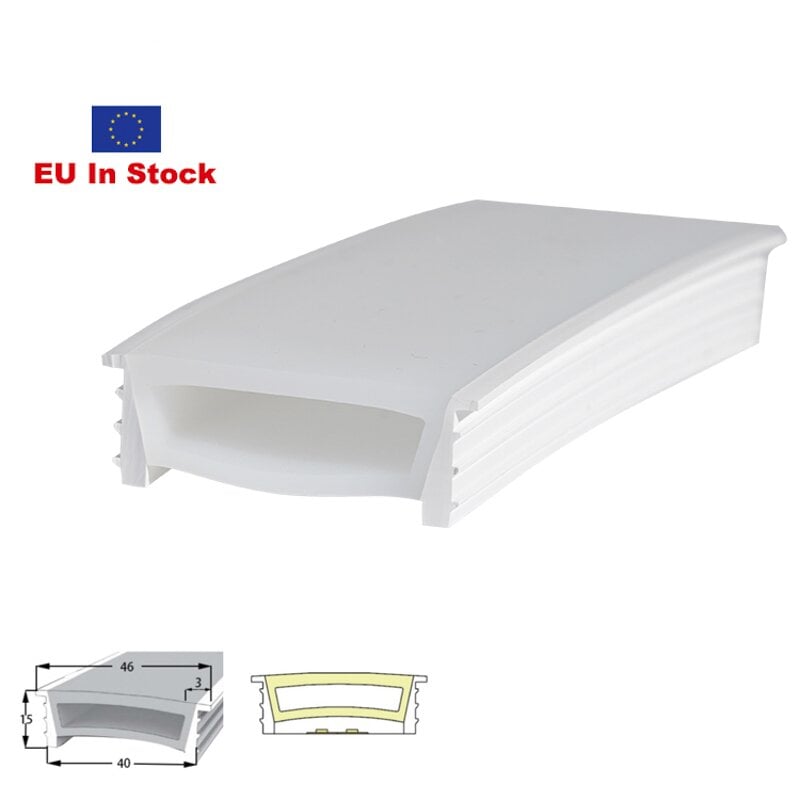
Smart silicone LED strips come packed with IoT tech these days, letting folks control them from their phones, talk to Alexa or Google Home, and set up all sorts of automated routines. What sets them apart from regular LED strips? These newer models have tiny built-in computers and wireless chips that actually connect to smart home systems. According to a recent report on smart lighting from 2023, around 6 out of 10 people care most about being able to use voice commands when they upgrade their lights. This has pushed manufacturers to start using common connection standards across their products, making it easier for consumers who want everything working together seamlessly.
These strips rely on Wi-Fi, Bluetooth, or Zigbee protocols for real-time communication with hubs or direct cloud connectivity. Advanced chipsets minimize latency to under 100ms, ensuring instant responsiveness to commands. Energy-efficient drivers reduce power consumption by up to 40% compared to analog counterparts, balancing performance with sustainability.
Silicone’s flexibility and heat resistance (withstanding up to 200°F) protect LED components from moisture, dust, and physical stress. This encapsulation also improves light diffusion, reducing hotspots.
| Feature | Silicone Encapsulation | Traditional PVC |
|---|---|---|
| Flexibility | High (bends up to 180°) | Moderate |
| Heat Resistance | 200°F | 140°F |
| IP Rating | IP67 | IP54 |
The material’s durability extends lifespan to 50,000+ hours, making it ideal for both indoor and outdoor installations.
Today's silicone based LED strips can work with smart homes thanks to built in Wi-Fi controllers that play nicely with both Alexa and Google Assistant systems. They hook right into standard 2.4GHz home networks so people can give voice commands such as telling Alexa to change the living room lights to blue or asking Google to lower bedroom lighting to about 30%. According to some industry data from last year, most folks manage to get their LED strips talking to voice assistants via those app interfaces pretty quickly, usually under five minutes according to what manufacturers report. When setting up multiple rooms, these controllers rely on fast response protocols that keep everything in sync between different areas of the house, typically responding within around 100 milliseconds or so for smooth transitions across all connected spaces.
When voice commands stop working, check if the Wi-Fi signal is strong enough (something around -60dBm or better works best) and make sure the controller has the newest firmware installed. According to some recent tests, most people run into trouble because their routers cause conflicts, especially when dealing with dual-band signals. Try turning off the 5GHz network while setting things up just to see if that helps. If someone's using Alexa, they might want to go back into the Smart Home Skill settings and disable then re-enable it again. For those on Google Home, heading into the Home app and selecting Update Devices usually fixes stubborn devices. As a last resort, resetting the LED controller to factory settings will restore all the original connection settings, though this should be considered after trying everything else since it wipes out any custom configurations.
Silicone LED strips controlled by voice commands are changing how people experience their homes, combining practicality with mood setting capabilities. People can tweak the brightness down to about 90% or switch among literally millions of different colors just by saying things like "make it darker" or "turn on party time." The ability to customize lighting has real impact on daily life too. Research indicates that when folks have control over their lighting environment, they tend to focus better, maybe around 30% improvement in concentration, and also report feeling less stressed, roughly a quarter reduction in anxiety levels at home. These strips offer something for everyone whether someone wants to create a calm atmosphere after work or needs bright light for reading late at night.
A 12-month smart home trial revealed silicone LED strips reduced energy consumption by 18% compared to traditional lighting. Participants achieved this through automated brightness adjustments and occupancy-based activation. One user noted, "Voice commands eliminated hallway switch hunts at night," while 78% reported improved sleep quality due to circadian-rhythm-aligned lighting schedules.
While voice commands deliver sub-1-second response times in optimal conditions, real-world factors like Wi-Fi stability and background noise require strategic placement of smart hubs. Independent testing shows silicone-encased strips maintain 98% command accuracy even in high-humidity kitchens, outperforming non-encapsulated alternatives by 22% in reliability metrics.
LED strips with silicone casing can handle mechanical stress roughly 40% better than those covered in PVC thanks to the flexible polymer material used. The elasticity means these strips can be bent around corners as small as 1.5 centimeters while still lasting well over 5,000 hours of operation time. That makes them perfect when working on projects with curved surfaces or unusual shapes in architecture. Weighing just about 0.8 kilograms per meter, they're light enough to mount without adhesives for short term setups too, which saves time during installation and cleanup later on.
Silicone encapsulation rated IP68 offers protection against water getting into LED chips, even if they're underwater at about 1 meter deep for over three days straight. When tested under extreme temperatures ranging from minus thirty degrees Celsius all the way up to eighty degrees Celsius, these silicone enclosures kept their brightness pretty much constant at around ninety eight percent of original output. That's quite impressive compared to what happens with epoxy resin alternatives which tend to lose nearly thirty percent of their effectiveness under similar conditions. Because of this kind of resilience, many manufacturers find these materials work well in places near the coast where salty air tends to shorten how long regular lights last before needing replacement.
Silicone LED strips today can hit around 160 lumens per watt, which is roughly 83 percent better than those old fashioned incandescent lights we used to rely on. Take a 10 meter length for instance it runs on just 72 watts but shines as brightly as a traditional 400 watt halogen setup. That kind of efficiency translates into real savings too, cutting down yearly electricity bills by over $240 in places like offices or retail stores. Plus there's another benefit worth mentioning these silicone materials actually move heat away about 30% quicker compared to acrylic options out there. This means the tiny light emitting diodes inside last much longer, clocking in at around 50 thousand operating hours before needing replacement.
Smart silicone LED strips are evolving beyond basic voice control, with data showing 58% of manufacturers now prioritizing AI-driven adaptive lighting. These systems analyze room occupancy, natural light levels, and user preferences to auto-adjust brightness and color temperatures. Emerging features include:
Industry leaders are addressing fragmented smart home ecosystems by adopting universal protocols like Matter-over-WiFi. This enables silicone LED strips to interact seamlessly with:
| Integration Type | 2023 Adoption Rate | 2025 Projection |
|---|---|---|
| Multi-platform voice control | 41% | 67% |
| Security system linkages | 22% | 49% |
| HVAC synchronization | 15% | 38% |
These advancements reduce setup complexity while expanding lighting’s role in energy management.
Developers are adopting modular designs allowing users to upgrade Wi-Fi/Bluetooth controllers separately from LED components—a response to 72% of consumers wanting future-proof lighting. Sustainability drives innovation too, with 90% of new silicone LED strip models using recyclable polymers and low-power chipsets (0.5W/ft).

 EN
EN