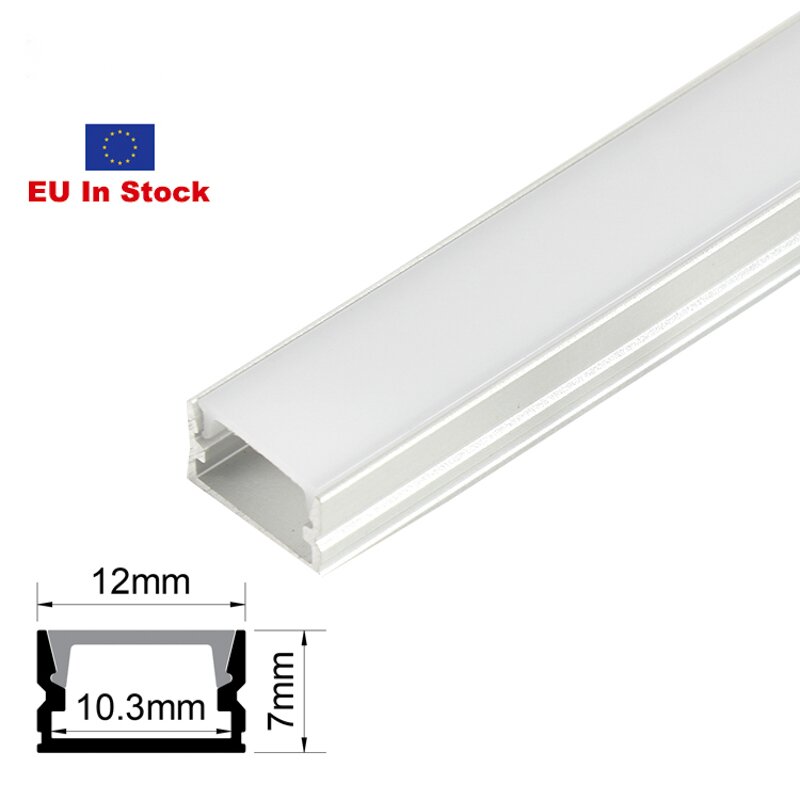
Too much heat is probably the biggest problem when it comes to LED lights breaking down over time. It makes them lose brightness faster and often leads to early failures. That's why aluminum profiles for LED strips work so well as heat sinks. They pull away the excess warmth from those delicate diodes just by being in direct contact with them. Keeping those junction points cool matters a lot. If things get hotter than around 85 degrees Celsius, the lifespan drops dramatically almost overnight. When there's no good way to manage all that heat, problems start compounding on themselves. Every 10 degree increase in temperature means a much bigger chance something will go wrong, plus the light gets noticeably dimmer after about 15 thousand hours of operation. Mount these LEDs properly inside aluminum profiles though, and they stay at stable temperatures. Most manufacturers claim around 50 thousand hours before needing replacement, even when installed in tight spaces or packed together densely.
Thermal imaging confirms the performance gap. Bare strips adhered directly to surfaces routinely reach 75–90°C during continuous operation—exceeding manufacturer-recommended safety margins. Identical strips mounted in standard aluminum extrusions consistently operate at 55–65°C, delivering a 15–20°C reduction. That difference isn’t incremental—it rewrites longevity physics. As shown below:
| Operating Temperature | Expected Lifespan | Lumen Maintenance (at 30k hrs) |
|---|---|---|
| 90°C (Bare Strip) | <25,000 hours | <70% initial output |
| 65°C (With Profile) | 50,000+ hours | >90% initial output |
Aluminum’s high thermal conductivity (200+ W/mK) and expanded surface area create efficient, passive heat pathways—impossible with plastic-backed strips alone. This measurable cooling effect converts marginal lighting setups into decade-long, maintenance-free solutions.
Regular LED strips tend to create distinct spots of light that form hot areas and patchy illumination, something that becomes really obvious when viewed up close or in shiny surroundings. Aluminum extrusions fix this problem by incorporating special diffusing lenses made from materials such as polycarbonate or frosted silicone. These components work by spreading out the light across tiny surface patterns at microscopic levels. What we get then is smooth even lighting without those annoying little LED points showing through. This matters a lot for premium applications including shop window displays, gallery lighting setups, and building highlights where how consistently everything looks determines whether it's considered good quality or not.
LED profiles are positioned at just the right angles so they don't shine directly into people's eyes but still spread light across surfaces effectively. The aluminum casings have a matte finish that soaks up those annoying reflections, which cuts down on glare by around three quarters when compared to regular LED strips according to some lighting research published in journals. That's why these lights work great installed at eye level in places like kitchens, office spaces, and small shop environments where customers hang out. They reduce eye strain without making the space feel dimmer than it should be. Plus, the metal housing hides all the messy stuff inside like wires, glue spots, and solder connections, giving everything a neat look that looks professionally done. Most architects and interior designers really appreciate this combination of benefits. The lights blend seamlessly into ceilings, cabinets, or curved architectural features while getting rid of those pesky little bright spots that ruin the overall effect.
Standard LED strips usually come with just an IP20 rating, which basically means they offer zero defense against water or dust getting in. When we add aluminum extrusion profiles to these systems, things change completely. The protection level jumps significantly, allowing for IP65 performance or even better if proper end caps and seals are used correctly. What this does is turn those simple strips into something much tougher for places where regular LEDs would fail. Think about things like signs outside buildings, lights near swimming pools, cabinets beneath kitchen counters, or even inside big factories. Tests have actually shown that installing these profiled systems cuts down on problems from moisture by around 70% when humidity levels are high. This makes sense because it stops issues like corroded connections and damaged insulation that happen when condensation creeps along bare circuit boards over time.
Beyond weather resistance, aluminum extrusions provide critical mechanical defense against three major environmental stressors:
This triple-layered protection ensures sustained optical and electrical performance: profiled systems maintain over 90% lumen output after 50,000 hours—even under continuous environmental stress—where bare strips often degrade by 40% or more in the same timeframe.
LED strip profiles make complicated lighting installations much easier to handle repeatedly and scale up over time, all while keeping their performance strong for years. These profiles come with specially designed mounting channels, various flexible backings available, and shapes that can bend around corners without breaking. They stick securely to weird surfaces, sharp turns, and those tricky recessed areas in buildings something that just cant be done with regular rigid lighting solutions. The industrial quality mounting hardware holds on really well too, staying attached even when temperatures swing between 10 degrees Celsius and 40 degrees Celsius, and humidity levels go above 60%. This kind of durability matters a lot in places where conditions change constantly throughout the day.
More than ease of installation, aluminum profiles deliver foundational reliability:
When we combine flexibility with solid engineering, the overall cost drops dramatically compared to traditional strip installations. Maintenance costs can fall around 70% over five years because these systems just don't break down as often. Think about old historic buildings needing modern lighting or businesses wanting precise illumination for their spaces. The LED strip profile works well in both scenarios, providing reliable performance that lasts for years. These strips aren't just there to shine bright lights either. They're built to stay put through all sorts of conditions, making them practical solutions for long term use rather than quick fixes.
 EN
EN